Water retention and bloating are often treated as the same problem, but they usually are not, and treating the wrong one is unlikely to help. Bloating is gas or digestive pressure in the gut; fluid retention is excess water held in body tissues, often far from the abdomen. In some cases, both can coexist, so paying attention to the pattern and accompanying signs matters.
Most mild cases of water retention and bloating respond to simple, consistent lifestyle measures. This article covers how to tell them apart, what drives each one, which steps reliably reduce water weight within 24 to 72 hours, and when symptoms belong with a doctor rather than a home remedy. For those in Cheshire who want to go further than lifestyle adjustments alone, clinically supervised options exist; we return to that later.
Key takeaways
- Different problems, different fixes: Bloating is gut-based; fluid retention sits in body tissues. The location of your swelling tells you which you are dealing with.
- Sodium reduction works: Cutting high-sodium processed foods is the most consistently evidence-backed dietary step for reducing water weight.
- Movement and elevation help fast: Mild puffiness from salt, heat, or inactivity can ease within hours using simple physical measures.
- Medication may be the cause: Several common prescriptions cause fluid retention. Never stop a prescribed medicine without speaking to your prescriber first.
- Supplements lack reliable evidence: No over-the-counter supplement reliably treats generalised fluid retention. Treat them as optional, not curative.
- Some symptoms are emergencies: Sudden one-sided leg swelling, chest pain, or breathing difficulty alongside swelling requires emergency care immediately.
Bloating vs. fluid retention: what is actually happening in your body?
The location of your discomfort is the clearest clue. Bloating stays in the abdomen: tightness, gurgling, pressure, cramps, and a distended belly that often fluctuates over the course of a day, worsening after meals and improving overnight or after passing gas. Fluid retention tends to appear well beyond the belly, swollen ankles, puffy feet, tight rings on the fingers, deeper sock marks, or a face that looks puffiest first thing in the morning. If your swelling is not in the abdomen, or if abdominal swelling accompanies these other signs, gas is unlikely to be the primary cause.
A simple physical check can help clarify things. Press your thumb firmly against swollen skin over the shin or ankle for five seconds, then release. If a lasting indentation remains, that is pitting oedema, which points to fluid in the tissue rather than trapped gas. Not all fluid retention produces pitting, but when it does, the distinction is clear. Bloating, by contrast, produces a taut abdomen with no indentation when pressed.
There is a third presentation worth knowing about: ascites, which is fluid accumulating in the abdominal cavity rather than the gut. A persistently enlarged, firm abdomen that does not fluctuate with meals or bowel movements, especially alongside ankle swelling or rapid unexplained weight gain, is not ordinary bloating and is not something to manage at home. It needs medical evaluation.
Causes of water retention and bloating: what drives each one?
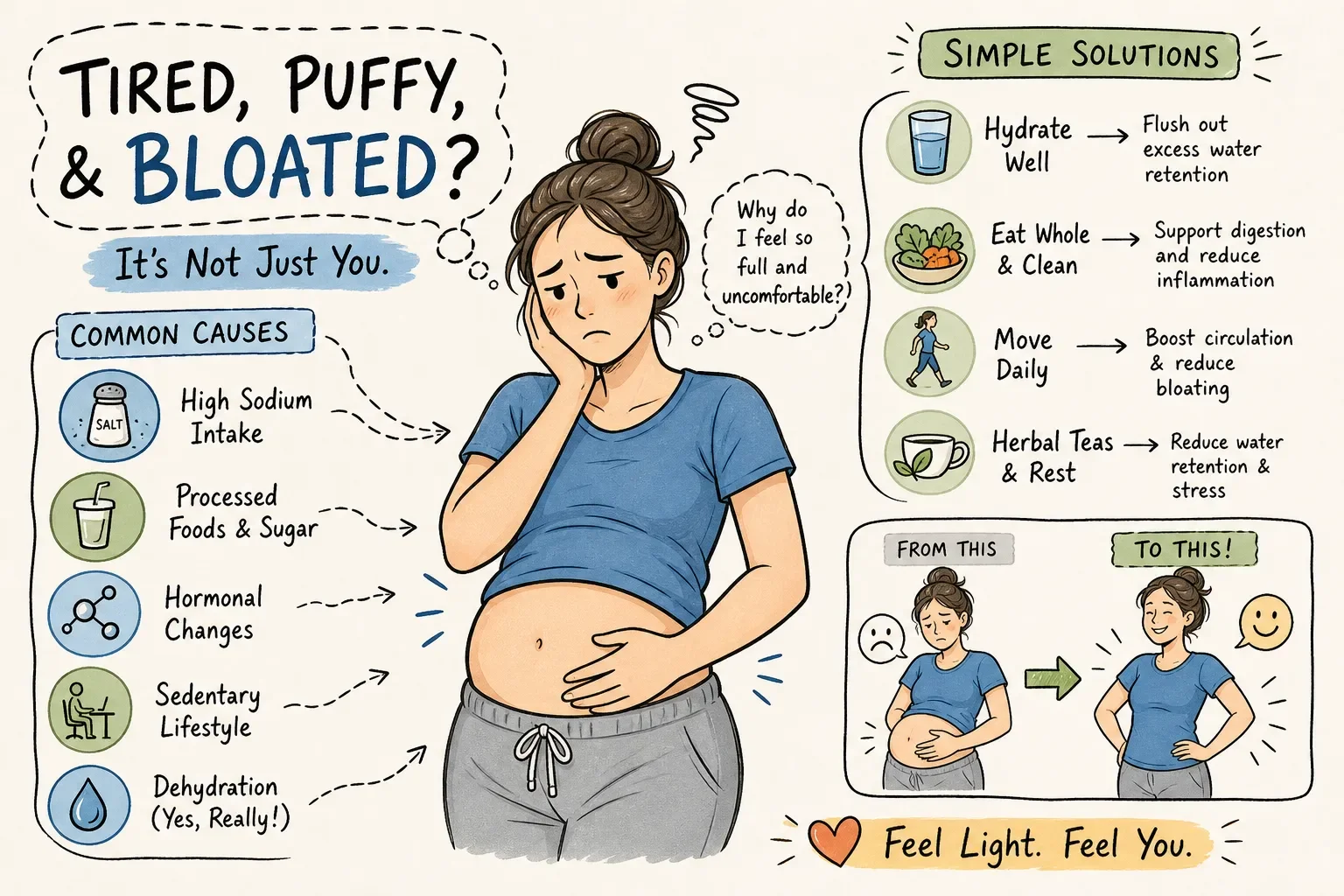
The most common reversible drivers of fluid retention are high sodium intake from processed and restaurant foods, prolonged sitting or standing, heat exposure, and carrying excess weight, which increases pressure on veins and impairs fluid return. Hormonal shifts are significant too: premenstrual changes, menopause, and oestrogen-containing contraception all affect how the body regulates fluid. For all of these causes, consistent lifestyle changes make a genuine difference.
Medication as a cause
Medication is a frequently overlooked cause of water retention. Calcium-channel blood-pressure medicines such as amlodipine and nifedipine, NSAIDs like ibuprofen and naproxen, and corticosteroids are well-documented contributors. Also implicated are certain diabetes medicines (particularly pioglitazone), gabapentin, pregabalin, and some hormonal therapies. The rule here is firm: do not stop a prescribed medicine without speaking to your prescriber. A clinical review can identify whether a dose adjustment or substitute is appropriate.
When lifestyle changes are not enough
Some causes lifestyle changes simply cannot fix. Heart, kidney, liver, thyroid, or significant venous and lymphatic disease can all produce persistent oedema. Lifestyle measures may support medical treatment in these cases, but they are not a replacement for it. Setting realistic expectations about what self-management can and cannot achieve is important before reaching for another home remedy.
Dietary changes to reduce water retention and bloating
Reducing sodium is the one dietary intervention with consistently solid evidence behind it. High sodium intake from processed foods, restaurant meals, salty snacks, and heavily salted cooking increases extracellular fluid, and cutting back reverses this. A general target of under 2,300 mg of sodium per day is widely cited in guidance from bodies such as the WHO and NHS; people with heart failure, kidney disease, or hypertension may need an individually prescribed limit. Extreme restriction without medical advice is not sensible: sodium is essential, and going too low creates its own problems.
Hydration and carbohydrates
Adequate fluid intake supports the kidneys in excreting sodium; deliberate dehydration has the opposite effect, prompting hormonal water conservation. Drink to thirst and keep intake steady. On carbohydrates: a drop in carbohydrate intake produces a rapid, short-term fall on the scales because depleted glycogen releases its associated water. This is not fat loss, and it has little meaningful effect on genuine oedema.
Potassium and supplements
Potassium-rich foods such as bananas, leafy greens, and potatoes can help counterbalance sodium, though anyone on ACE inhibitors, ARBs, or potassium-sparing diuretics should check with their prescriber before increasing potassium intake significantly.
On supplements, the honest answer is that none reliably treats generalised fluid retention. Magnesium has limited evidence specifically for premenstrual-related bloating. Vitamin B6 shows modest evidence for PMS-related symptoms only. Herbal "diuretics" such as dandelion and horsetail have sparse evidence and carry real risks of dehydration and drug interactions. Treat supplements as condition-specific and optional, not as substitutes for addressing the root cause.
Fast, safe habits to ease puffiness and swelling within 72 hours
For mild puffiness from salt, heat, inactivity, or poor sleep, the most effective immediate step is gentle movement. A five to ten-minute walk every hour or two, combined with ankle flexions when seated, supports circulation and reduces pooling in the lower limbs. Avoid prolonged stillness. The body moves fluid when you move, there is nothing more complicated to it than that.
Elevation works alongside movement. Raise swollen legs or arms above heart level while resting, propped on pillows, for around fifteen to thirty minutes.
For facial puffiness, sleeping with the head elevated rather than lying flat reduces morning swelling noticeably. A cool, damp cloth or wrapped cold pack applied for ten to twenty minutes (never ice directly on skin) can reduce localised puffiness, including around the eyes or face. For limb swelling, a properly fitted compression sock or elastic wrap limits further fluid accumulation. It should feel supportive; if the skin turns pale, cold, or blue, loosen it immediately.
For the 48 to 72 hours after noticing swelling: limit high-sodium foods and alcohol, drink fluids normally, and prioritise sleep. Do not aggressively restrict water or self-prescribe over-the-counter water tablets. These habits reduce the load while the body resets. If swelling is not improving after two to three days of sensible measures, it needs a clinical eye, not another home remedy.
When water retention and bloating need a doctor
Certain symptoms alongside swelling need emergency care right now. Call 999 if you experience breathlessness or difficulty breathing, chest pain or palpitations, sudden one-sided leg swelling with pain, warmth, or redness (possible DVT), sudden facial or throat swelling with wheezing or difficulty swallowing (possible severe allergic reaction), inability to urinate, or coughing up blood.
For urgent but non-emergency situations, arrange a GP appointment for swelling that is new, unexplained, persistent beyond a few days, worsening, or affecting multiple body areas at the same time. A GP conversation is also warranted for swelling accompanied by unexplained weight gain, reduced urine output, jaundice, or any swelling in someone with a known heart, kidney, or liver condition. Medication-related oedema always requires a prescriber's review; it is not something to self-manage by adjusting your salt intake and hoping for the best.
How clinical wellness treatments fit into a longer-term plan
Once the root causes of fluid retention and bloating are addressed, some people find that persistent fatigue makes it harder to stay consistent with the dietary and activity habits that keep puffiness at bay. At MAK Clinic in Knutsford, Cheshire, B12 and other vitamin injection therapies are offered as part of a broader wellness programme under the supervision of a Nurse Prescriber. Each patient is assessed for suitability rather than simply handed a product off a menu.
For people who have already done the lifestyle groundwork but remain self-conscious about specific areas, particularly loose skin or stubborn pockets that do not respond to diet or movement, non-invasive body contouring treatments can play a supporting role. Treatments such as 3D Lipo fat freezing and radio frequency skin tightening, both available at MAK Clinic, address body composition and skin firmness rather than temporary water weight. They are not a treatment for oedema, but they sit logically within a wider plan for someone who has stabilised their fluid levels and wants clinically safe, downtime-free options close to home.
The straightforward summary
Water retention and bloating are distinct problems with different causes and different solutions. Distinguishing between them is the first step, and the location of your swelling does most of the work. For most people dealing with diet-related or inactivity-related cases, reducing sodium, staying mobile, maintaining normal hydration, and managing hormonal and lifestyle triggers will handle mild symptoms within a few days.
Persistent or unexplained swelling, especially with any of the red-flag symptoms described above, belongs with a GP. That is not overcautious advice; it is just accurate. For those who have stabilised the basics and want support with energy levels or body composition concerns, clinical options are worth exploring with a qualified practitioner. The body responds well when you address the actual problem, not just the symptom.
If you are based in Cheshire and want to discuss clinically led wellness or body treatment options, get in touch with our team at MAK Clinic to arrange a consultation.
Lymphatic Drainage Pressotherapy FAQs
-
At Medical Aesthetics Knutsford (MAK Clinic), we are more than just a clinic; we are pioneers in the aesthetic treatment industry with a commitment to excellence that spans over two decades.
Based in Knutsford, MAK Clinic is easily accessible from Manchester and surrounding Cheshire areas, including Alderley Edge, Macclesfield, Wilmslow, Northwich and Hale.
MAK Clinic only uses the highest-quality Botulinum Toxin and filler products, including Juvederm, Belotero, Restylane, and Teosyal.
MAK Clinic exclusively uses the highest quality, regulated products, and our registered healthcare practitioners perform all procedures.
Founded by Jennifer Dowdall - RGN INP, all treatments are performed or overseen by Nurse Prescriber Practitioners, ensuring the highest standards of medical safety and expertise.
Read more about your aesthetics practitioner, Jennifer or more about MAK Clinic. Read our latest reviews or get in touch.
-
You can book a consultation for the Lymphatic Drainage Pressotherapy treatment using the Book Now page or the universal "Book Now" button at the bottom right of every web page.
During the booking process, you can find the pricing for the treatment and the value-added complementary therapies that enhance its effectiveness.
If you need clarification on something, please feel free to book a consultation with us first so that we can talk about your goals and a personalised treatment plan.
-
Bloating originates in the gut: it is caused by trapped gas or digestive pressure and is usually confined to the abdomen. Water retention (oedema) is excess fluid held in body tissues and typically appears in the ankles, feet, hands, or face. The two can coexist, but they have different causes and respond to different interventions. The pitting test, pressing the shin firmly for five seconds, is a quick way to check whether tissue fluid is involved.
-
Mild water retention and bloating linked to dietary sodium, inactivity, or heat can improve within 24 to 72 hours with consistent measures: reducing high-sodium foods, gentle movement, elevation, and normal hydration. Gas bloating often resolves faster, within hours, once the trigger (a particular food, for example) has passed. Persistent or unexplained swelling beyond a few days warrants a GP review rather than continued self-management.
-
Yes, within reason. Normal, steady fluid intake helps the kidneys clear sodium. Cutting back on water prompts the body to hold on to fluid instead. Drink to thirst, keep intake consistent through the day and avoid both deliberate dehydration and forcing litres beyond what you need.
-
Oestrogen and progesterone shift in the days before menstruation and change how the kidneys handle sodium and fluid. Puffy fingers, heavier legs and a swollen abdomen in the week before a period are common and settle once bleeding starts. Reducing salt, staying active and sleeping well in the premenstrual week take the edge off. Severe or worsening symptoms deserve a GP conversation.
-
Not for gas bloating, which has nothing to do with tissue fluid. For mild water retention, they shift fluid briefly, and the effect wears off quickly, often with rebound swelling and a risk of dehydration or low potassium. Prescription diuretics are for diagnosed medical causes and need monitoring. Self-prescribing water tablets is not a safe shortcut.
-
Both. Alcohol irritates the gut and produces gas, and the day after drinking the body holds sodium and fluid to recover from dehydration, which shows as facial puffiness and swollen hands. Salty food alongside drinking makes the effect worse. Puffiness from a heavy night usually clears within 48 hours with normal hydration and movement.
-
Manual or mechanical lymphatic drainage, including pressotherapy, encourages fluid to move through the lymphatic system and is used to ease mild, lifestyle-related puffiness in the legs. Pressotherapy is not a treatment for oedema caused by heart, kidney, liver or venous disease, and anyone with persistent swelling needs a GP assessment before booking any clinic treatment.