Cryolipolysis treatment, commonly called fat freezing, has gone from a niche procedure discussed in specialist journals to one of the most searched non-surgical body contouring treatments in the UK.
Yet most people booking it still have only a vague idea of what it actually does to the body, what results are realistic, and what the risks genuinely look like. That gap between marketing and clinical reality leads to a lot of disappointment and, occasionally, genuine harm.
Cryolipolysis is a clinically developed method for reducing stubborn, localised fat deposits without surgery, anaesthesia, or any meaningful downtime. It was not invented by a wellness brand. The underlying science came out of Harvard research published in 2007, and the treatment has since accumulated a growing body of clinical evidence, including multiple systematic reviews and meta-analyses. At MAK Clinic in Knutsford, Cheshire, it is offered as part of a personalised body contouring assessment led by a Nurse Prescriber rather than sold off a standard menu, which tells you something important about where this treatment belongs: in a proper clinical setting, not a beauty salon.
How cryolipolysis treatment actually works
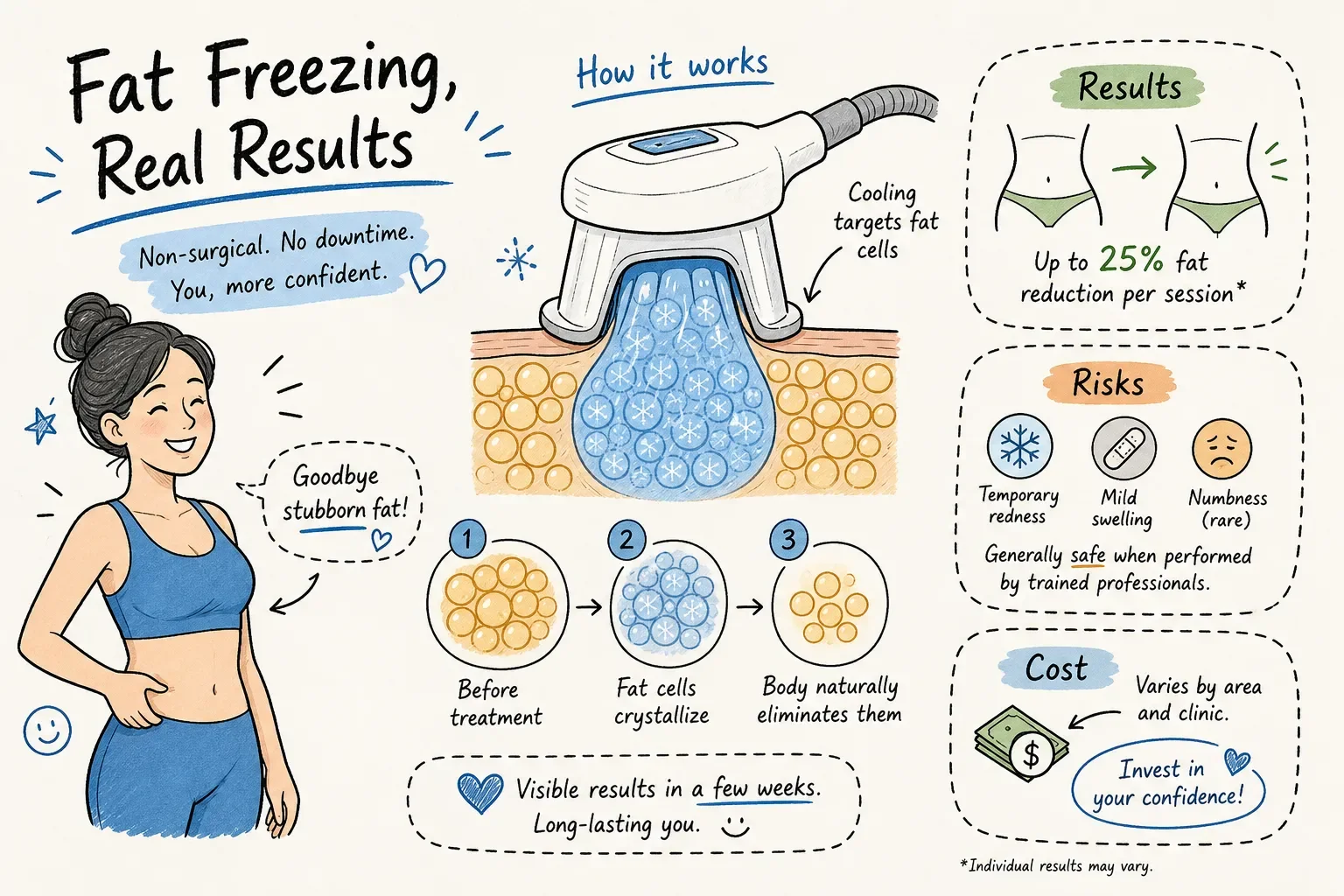
The mechanism is simpler than the name suggests. An applicator is placed against the skin over the target area, suctioning the tissue into a cup and reducing the local temperature to well below freezing, commonly cited clinical ranges sit around −5°C to −10°C. At that temperature, fat cells begin to crystallise and die through a process called selective cryolysis, or cold-induced lipolysis. The destroyed fat cells are then cleared gradually by the body's lymphatic system over the following weeks.
The reason this works at all comes down to biology. Fat cells, known as adipocytes, are uniquely sensitive to cold. They undergo cold-induced apoptosis (programmed cell death) at temperatures that skin cells tolerate relatively well. Importantly, skin, nerves and surrounding tissues are largely spared in most patients due to this selective cold sensitivity, though temporary adverse effects such as numbness or neuropathic symptoms can and do occur, and are worth understanding before you proceed. This selectivity, first identified in Harvard research published in 2007 by Manstein et al., is what makes cryotherapy fat reduction effective and relatively safe when performed correctly.
Because the body clears the dead cells gradually through the lymphatic system, results are not immediate. Patients who expect to see a difference walking out of the clinic will be disappointed. The timeline is weeks to months, not hours.
Who is a realistic candidate for cryolipolysis treatment
Cryolipolysis is not a weight-loss tool. This point matters more than almost anything else in this article. The treatment is designed for people who are at or close to a healthy weight but have specific, pinchable pockets of fat that do not respond to diet and exercise. If your goal is to lose several stone, this is not the right conversation.
Body types and areas it works best for
The physical requirement is straightforward: the applicator needs to be able to suction the fat tissue into the cup, which means the fat in the treatment area needs to be pinchable. Patients should also have a stable body weight and realistic expectations about the degree of change involved. The most commonly treated areas include the abdomen, flanks (love handles), inner thighs, upper arms, and under the chin. Results vary by area and by individual, so a good clinic will tell you honestly whether your anatomy is well suited before you commit to a course of treatment.
When a clinician will advise against it
There are clear contraindications that a proper consultation must screen for. These include:
- Cryoglobulinaemia
- Cold agglutinin disease
- Paroxysmal cold haemoglobinuria
- Raynaud's phenomenon
- Neuropathy in the treatment area
- Open wounds or active skin conditions at the site
This is not a tick-box formality. At a properly run clinic such as MAK Clinic, an individualised clinical assessment is the starting point for any body contouring plan precisely because the suitability question has a real answer that affects outcomes and safety.
What to expect during and after a session
The experience is not painful, but it is not entirely comfortable either. When the applicator suctions the tissue and cooling begins, most patients feel intense cold and pressure for the first five to ten minutes. That sensation then numbs, and the rest of the session is largely uneventful. A session typically lasts 35 to 60 minutes per area depending on the applicator used, and multiple areas can be treated in one visit. Patients can usually do sedentary activities, reading or working on a laptop, throughout.
The hours immediately after treatment look worse than they feel. The treated area is temporarily red, firm, and swollen. Some patients experience tingling, bruising, or a sensation of numbness that can persist for several weeks. These reactions are a normal part of the body's response to controlled cold exposure and typically resolve without intervention. No downtime is needed, and most people return to normal activity the same day. That said, any symptoms that feel severe or worsen over time warrant clinical review. The visible result will not appear for several weeks, because the body needs time to clear the destroyed fat cells through the lymphatic system.
Cryolipolysis treatment results: what the evidence actually shows
Clinical studies show that cryolipolysis reduces fat thickness in a treated area by approximately 10% to 25% per session. A 2021 systematic review by Ingargiola et al. and Cleveland Clinic data both place the average around 20%, with some studies reporting up to 28% reduction at four months post-treatment. These are localised, measurable changes, they will not show up on the scales. The change is a reduction in the treated area, not a shift in overall body weight.
Timeline and number of sessions needed
Results begin to appear at around four to eight weeks as the body clears treated fat cells, with the full result typically visible at two to three months. Most patients require one to three sessions per area, with larger or denser fat deposits generally needing two to three. The recommended interval between sessions is six to eight weeks. If you are planning to treat multiple areas or want more meaningful contouring, plan for a course of treatment rather than a single appointment and expect the process to take several months.
The risks of cryolipolysis treatment you need to understand before you book
Most side effects are predictable and temporary: redness, swelling, bruising, tenderness, tingling, and numbness at the treated site. These are a normal part of the body's response to controlled cold exposure. They resolve without intervention over days to several weeks and are not cause for concern in an otherwise healthy, suitable patient.
Paradoxical adipose hyperplasia: the rare risk worth knowing
Paradoxical adipose hyperplasia (PAH) is different. Instead of shrinking, the treated fat area grows larger and becomes firmer, typically becoming noticeable two to six months after treatment. It does not resolve on its own. When it occurs, it usually requires surgical liposuction to correct, a significant consequence from a procedure people choose specifically to avoid surgery.
The published incidence data tells an interesting story about how surveillance intensity affects reported rates. The original manufacturer estimate placed PAH at around 0.025%, or approximately 1 in 4,000 treatment cycles. A 2023 meta-analysis of 13,078 patients across 28 studies found a pooled incidence of 0.22%, roughly 1 in 455 patients. The difference between those numbers reflects how passively versus actively complications were tracked, not a change in the treatment itself. PAH appears to occur more frequently in men and in abdominal treatments, though some analyses find no statistically significant sex effect, and the exact risk factors are not fully established.
The honest summary: PAH is genuinely rare, but 0.22% is not negligible. A good clinic will raise it with you unprompted, explain what to look for, and have a clear pathway for follow-up if you develop concerns. Any clinic that cannot or will not discuss it clearly before you book is one worth avoiding.
UK costs, alternatives, and choosing the right clinic
In the 2026 UK market, pricing varies considerably. Budget clinics typically charge £159 to £250 per area. Mid-market providers charge £250 to £399. Larger or premium treatment plans range from £450 to £650 per applicator cycle, with multi-area packages commonly ranging from £299 to over £1,200 depending on the number of areas and sessions included. A very low price is a prompt to ask questions: about the equipment being used, the practitioner's training, and whether a proper clinical assessment is included in the booking.
How fat freezing compares with liposuction and other non-surgical treatments
Surgical liposuction removes larger volumes of fat in one procedure and delivers more immediate, dramatic results. It is the right choice when significant debulking is the goal. It also requires anaesthesia, carries surgical risks including infection, bleeding, and scarring, and involves days to weeks of recovery. Non-surgical fat reduction via cryolipolysis sits firmly in the low-downtime category and is appropriate for modest, localised fat reduction in people who want to avoid surgery entirely.
Compared with other non-surgical options, SculpSure uses laser heat rather than cold and targets a similar bracket of modest, localised fat reduction. Radiofrequency treatments aim for gradual improvement but tend to be better suited to skin tightening than fat reduction specifically. The differences between these options lie mainly in mechanism and comfort rather than dramatically different outcomes. None of them replaces liposuction for patients wanting major volume reduction.
What to look for when choosing a cryolipolysis clinic
The criteria are straightforward. Good clinics lead with a proper clinical consultation, not a skin map or a price list. Practitioners should discuss contraindications and PAH with you directly and clearly, without needing to be pushed. Regulated, medical-grade equipment and clear documentation of outcomes are non-negotiable. Clinics led by Nurse Prescribers or doctors, such as MAK Clinic in Knutsford, Cheshire, take a clinically grounded approach in which treatment is matched to the individual rather than pushed from a standard package. That distinction matters more than the price per area.
The bottom line
Cryolipolysis is a legitimate, evidence-based option for reducing stubborn localised fat in suitable candidates. It works gradually, delivers modest but measurable results, and belongs in a clinical setting where a proper assessment comes first. It is not a substitute for liposuction in people wanting major volume reduction, and the risk of PAH, though rare, warrants a real pre-treatment conversation rather than a disclaimer buried in the small print.
For patients who are genuinely good candidates, with the right expectations and a qualified practitioner guiding the plan, cryolipolysis treatment can produce visible, meaningful results. The most important step is booking a consultation that gives you straight answers rather than just a booking slot.
Cryolipolysis treatment FAQs
-
At Medical Aesthetics Knutsford (MAK Clinic), we are more than just a clinic; we are pioneers in the aesthetic treatment industry with a commitment to excellence that spans over two decades.
Based in Knutsford, MAK Clinic is easily accessible from Manchester and surrounding Cheshire areas, including Alderley Edge, Macclesfield, Wilmslow, Northwich and Hale.
MAK Clinic only uses the highest-quality Botulinum Toxin and filler products, including Juvederm, Belotero, Restylane, and Teosyal.
MAK Clinic exclusively uses the highest quality, regulated products, and our registered healthcare practitioners perform all procedures.
Founded by Jennifer Dowdall - RGN INP, all treatments are performed or overseen by Nurse Prescriber Practitioners, ensuring the highest standards of medical safety and expertise.
Read more about your aesthetics practitioner, Jennifer or more about MAK Clinic. Read our latest reviews or get in touch.
-
You can book a consultation for the Cryolipolysis treatment using the Book Now page or the universal "Book Now" button at the bottom right of every web page.
During the booking process, you can find the pricing for the treatment and the value-added complementary therapies that enhance its effectiveness.
If you need clarification on something, please feel free to book a consultation with us first so that we can talk about your goals and a personalised treatment plan.