Plasma soft surgery in Cheshire is available at MAK Clinic in Knutsford, a medically led option for patients researching mole removal, skin tags, fibromas, and non-surgical skin tightening.
The treatment uses a handheld device to remove or reduce unwanted skin growths without a scalpel, a general anaesthetic, or a hospital referral. No theatre time, no sutures, and downtime is typically around five to ten days rather than weeks. For patients across Cheshire who want a clinically sound alternative to surgery, it's worth understanding exactly what this procedure involves before you book anywhere.
At MAK Clinic in Knutsford, plasma soft surgery is performed by an experienced, qualified Nurse Prescriber with an extensive background in medical aesthetics spanning two decades of dedicated practice. Every patient goes through a thorough clinical assessment before any treatment is agreed. That matters for reasons this article will make clear. By the end, you'll know how the procedure works, what it can and can't treat, what recovery looks like, and how to tell a safe, qualified provider from a risky one.
How plasma soft surgery actually works
The science without the jargon
The device never touches your skin. Instead, it ionises the air between its tip and your skin surface, creating a tiny plasma arc. That arc causes the uppermost skin cells to sublimate, they convert directly from solid to gas. The skin is neither cut nor burned in the conventional sense, and nothing is removed mechanically. The process is precise, controlled, and confined to the superficial skin layer.
This is what separates plasma soft surgery from excision. There's no open wound, no bleeding to manage, and no sutures. The surrounding tissue remains untouched. For small benign lesions, that's a significant practical advantage.
What the treatment session looks like
A topical anaesthetic cream is applied before the session begins, often left on for around 20 to 45 minutes depending on the product and clinic protocol. The practitioner then uses the device to create a grid of tiny dots over the target area. Each dot causes a micro-injury at the surface, triggering a healing response and, in skin tightening applications, visible contraction of the treated tissue. Session length varies with the area and number of lesions being addressed; clinics report timings from short appointments to around an hour for larger or multiple areas.
What plasma soft surgery is used to treat
Moles, skin tags, and fibromas
These three are the most common reasons patients in Cheshire seek out plasma treatment. Skin tags are soft, benign growths that hang from the skin on a narrow stalk, often appearing on the neck, underarms, or skin folds. Moles are clusters of pigmented melanocytic cells, flat or dome-shaped, that develop almost anywhere on the body. Fibromas are firmer, deeper growths made of connective tissue, most often appearing on the legs.
Plasma is well suited to skin tags because they're superficial and pedunculated. The plasma arc desiccates the stalk and removes the lesion with minimal trauma to surrounding skin. For benign moles, the picture is more nuanced. Plasma can treat small, confirmed-benign lesions, but a clinical assessment is non-negotiable first. Not every mole is a suitable plasma candidate; some require GP or dermatology referral to rule out anything that warrants histological examination before cosmetic removal is considered. For deeper fibromas, surgical excision is often the more appropriate route. A qualified practitioner will tell you this honestly, even if it means not treating you that day.
Other conditions commonly treated
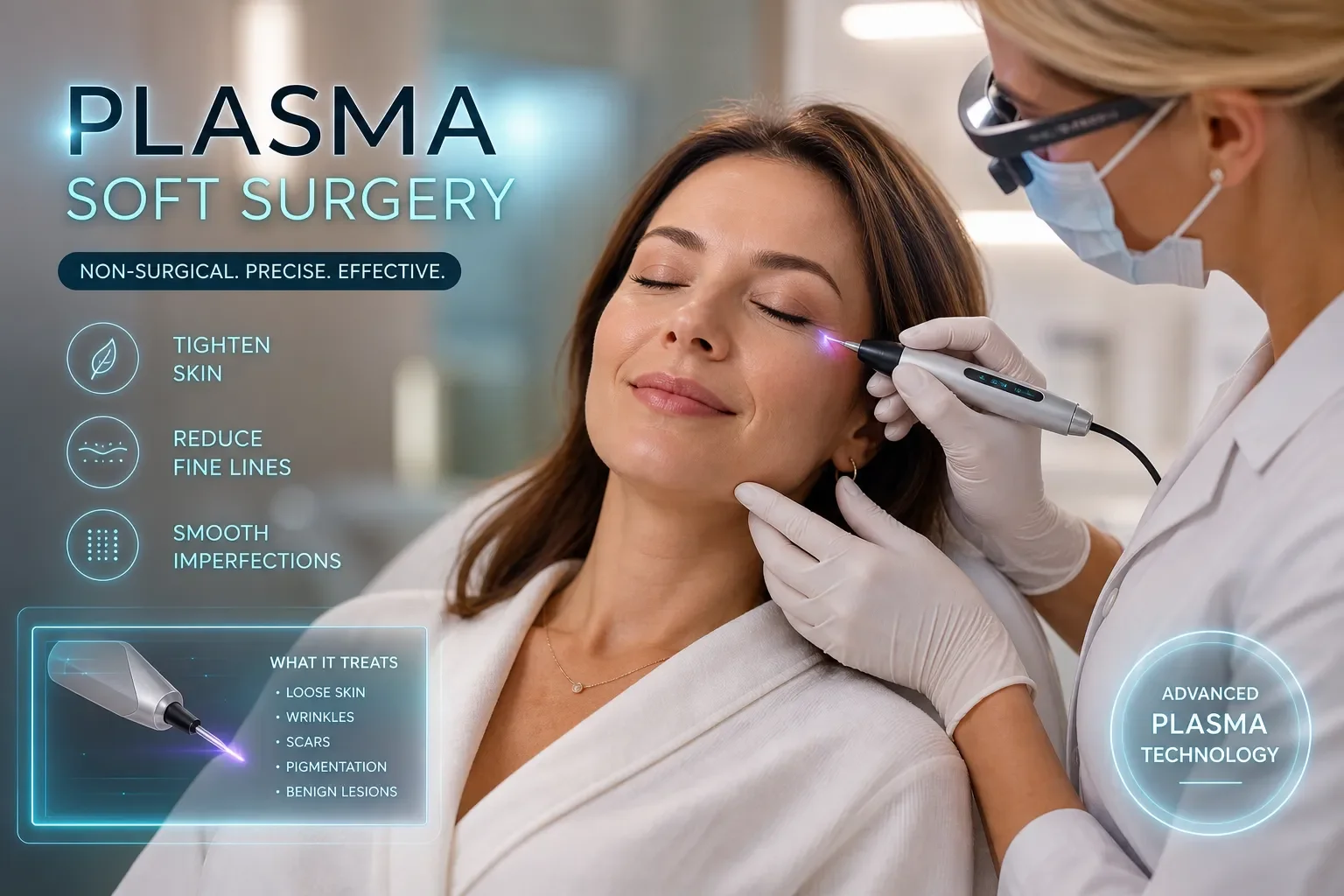
The same plasma technology is used for non-surgical eyelid tightening, fine lines around the mouth, mild skin laxity, and acne scarring. These applications differ from lesion removal in both technique and goal: rather than ablating a growth, the treatment uses controlled micro-injuries to stimulate collagen remodelling and produce a tightening effect. For patients interested in plasma skin tightening around the eye area, particularly hooded upper lids, this approach can produce meaningful results without surgery.
Where it has limits
Plasma soft surgery is not appropriate for deeply pigmented or clinically suspicious lesions. It's not suitable for large surface areas, and it carries a higher risk of adverse outcomes for darker skin tones (Fitzpatrick IV to VI) without careful assessment and adjusted technique. Other contraindications include active infection at the treatment site, a history of keloid scarring, autoimmune conditions affecting healing, pregnancy, and recent isotretinoin use. A reputable clinic will screen for all of these at consultation. A non-medical one may not.
Device types: Plexr, plasma pen, and J-Plasma compared
What separates branded devices from generic plasma pens
Three categories come up most often in Cheshire. Plexr is a branded plasma device with CE marking, designed specifically for controlled non-surgical resurfacing. It's positioned for delicate areas and facial work, with a more predictable energy profile than generic alternatives. Generic plasma pens represent a broad and inconsistently regulated category: the quality, energy output, and safety standards vary considerably between devices, including some that are not authorised for clinical use. J-Plasma and Renuvion sit at the other end of the spectrum entirely; these are surgical-grade systems that can involve subcutaneous use and are typically deployed in theatre settings for more aggressive tissue tightening.
Outcomes, downtime, and risk profiles differ across all three categories, which is exactly why you should ask, at any consultation, which device is being used and why it's appropriate for your concern.
Why the device alone doesn't determine your result
The practitioner's clinical training, assessment protocol, and technique matter more than the brand name on the device. An experienced Nurse Prescriber using a well-calibrated plasma pen will produce better outcomes than an undertrained operator using a premium branded system at incorrect settings. Reported cases of scarring and prolonged hyperpigmentation following plasma treatments are frequently linked to inadequate training and poor patient selection rather than any particular device category. The device is a tool. Clinical judgement is what makes it safe.
What recovery and aftercare actually look like
The first five to ten days after treatment
Small dark crusts form at each treatment point shortly after the session. These typically fall away naturally between days five and ten. In the first 48 hours, swelling and redness are common, particularly pronounced around the eye area. The skin beneath the crusts will look pink for a few weeks as it heals. This is a normal part of the process and not a sign that something has gone wrong.
The single most damaging thing you can do during recovery is pick the crusts. Picking prolongs healing, raises infection risk, and significantly increases the chance of scarring. Collagen remodelling continues for four to eight weeks after treatment, sometimes longer, which means final results aren't visible immediately after the crusts resolve.
Aftercare rules that are non-negotiable
Keep the treated area clean and dry, and avoid makeup until all crusting has fully resolved. Once the skin has healed, apply SPF 50 every day without exception. Step away from retinoids, AHAs, vitamin C serums, and any other active topicals until the skin has fully settled. Saunas, swimming pools, steam rooms, and strenuous exercise should be avoided for at least one to two weeks. A clinic worth your time will give all of this in writing before you leave the room, not as an afterthought.
Why the practitioner's qualifications matter more than anything else
What happens when plasma is used without proper assessment
An unqualified practitioner cannot reliably assess whether a lesion is safe to treat with plasma. They may ablate a mole that should have been sent to a dermatologist. They may use settings that are too aggressive for your skin tone, causing prolonged hyperpigmentation or permanent scarring. The device produces real, controlled tissue damage. Without clinical judgement guiding it, that damage becomes unpredictable. The absence of proper training is the risk here, not the technology itself.
What a proper clinical consultation should include
Expect a full medical history, a skin type assessment using the Fitzpatrick scale, individual assessment of each lesion, a clear and honest discussion of realistic outcomes, written aftercare instructions, and a transparent conversation about when the treatment isn't appropriate for you. This is standard at a medically led clinic. It is not standard across every beauty salon or aesthetics studio advertising a "plasma pen" on social media.
Why Cheshire patients choose MAK Clinic for this treatment
At MAK Clinic in Knutsford, plasma soft surgery for moles, skin tags, and fibromas is carried out by a qualified Nurse Prescriber with an extensive background in medical aesthetics, trained to an advanced clinical standard. Every patient receives a full assessment before any treatment plan is agreed. If the procedure isn't appropriate for you, or if your lesion warrants referral rather than cosmetic removal, the team will say so clearly. Medically led clinics routinely refer patients when lesions appear suspicious, and that level of clinical oversight is exactly what justifies choosing a qualified provider over a lower-cost, less regulated alternative.
Plasma soft surgery in Cheshire: costs and what to expect
Typical price ranges by treatment area
For lesion removal, including skin tags, fibromas, and confirmed-benign small moles, prices in Cheshire generally range from around £100 to £200 for a single small area, with larger or multiple lesions priced accordingly. For non-surgical eyelid tightening and plasma blepharoplasty, prices typically range from £200 to £495 per area. A brow lift via plasma commonly sits between £300 and £340. Prices vary based on the clinic, treatment complexity, and device used.
What the price difference actually reflects
A £100 treatment at an unregulated salon and a £350 treatment at a Nurse Prescriber-led clinic are not the same proposition. The higher price reflects clinical assessment time, regulated premises, a fully qualified and insured practitioner, appropriate aftercare follow-up, and the clinical oversight to refuse treatment when it isn't right for you. When any device is being used to deliver controlled energy to your face or body, that difference is not trivial.
Plasma soft surgery in Cheshire, common questions
Is plasma soft surgery painful?
Most patients find the procedure comfortable once the topical anaesthetic has taken effect. A mild sensation of heat or tingling is typical during treatment. Pain levels vary with the area being treated and individual sensitivity.
How many sessions will I need?
For small, discrete lesions such as skin tags, a single session is usually sufficient. For skin tightening applications, non-surgical blepharoplasty, for example, some patients benefit from a follow-up session after three to six months once initial results have settled.
Can I find plasma soft surgery near me in Cheshire?
MAK Clinic is based in Knutsford, central Cheshire, and sees patients from across the region. The clinic offers an initial clinical assessment so you can discuss your concerns with a qualified Nurse Prescriber before any treatment is agreed.
What is fibroblast plasma treatment?
Fibroblast plasma treatment is another term used for plasma soft surgery, referring to the way the procedure stimulates fibroblast activity to produce collagen and tighten skin. The terms are often used interchangeably, though technique and application vary by device and practitioner.
The right first step
Plasma soft surgery is a well-established, non-surgical option for removing common benign skin lesions and addressing areas of skin laxity across Cheshire. The procedure itself is straightforward. What makes it safe and effective is the clinical expertise behind it: proper assessment, appropriate patient selection, a calibrated device in trained hands, and thorough aftercare guidance from start to finish.
If you're considering plasma soft surgery in Cheshire for a mole, skin tag, fibroma, or any area of skin concern, start with a proper consultation rather than a price comparison. At MAK Clinic in Knutsford, the initial clinical assessment is performed by a qualified Nurse Prescriber, so you know exactly what you're dealing with before any treatment begins. Get in touch with the team to book your consultation and take the first step with confidence.
Plasma Soft Surgery FAQs
-
At Medical Aesthetics Knutsford (MAK Clinic), we are more than just a clinic; we are pioneers in the aesthetic treatment industry with a commitment to excellence that spans over two decades.
Based in Knutsford, MAK Clinic is easily accessible from Manchester and surrounding Cheshire areas, including Alderley Edge, Macclesfield, Wilmslow, Northwich and Hale.
MAK Clinic only uses the highest-quality Botulinum Toxin and filler products, including Juvederm, Belotero, Restylane, and Teosyal.
MAK Clinic exclusively uses the highest quality, regulated products, and our registered healthcare practitioners perform all procedures.
Founded by Jennifer Dowdall - RGN INP, all treatments are performed or overseen by Nurse Prescriber Practitioners, ensuring the highest standards of medical safety and expertise.
Read more about your aesthetics practitioner, Jennifer or more about MAK Clinic. Read our latest reviews or get in touch.
-
You can book a consultation for the Plasma Soft Surgery treatment using the Book Now page or the universal "Book Now" button at the bottom right of every web page.
During the booking process, you can find the pricing for the treatment and the value-added complementary therapies that enhance its effectiveness.
If you need clarification on something, please feel free to book a consultation with us first so that we can talk about your goals and a personalised treatment plan.
-
Only after clinical assessment. A Nurse Prescriber examines each lesion first and refers anything suspicious or deeply pigmented to a GP or dermatologist before cosmetic removal is considered. Small, confirmed-benign moles respond well. Treating an unassessed mole with plasma risks removing something which needed histological examination.
-
Correctly performed on suitable skin, the treatment heals with minimal marking. Scarring and prolonged pigmentation are most often linked to aggressive settings, poor patient selection and picking the crusts during recovery. Following the written aftercare and wearing SPF 50 daily once healed gives you the best chance of a clean result.
-
Fitzpatrick IV to VI skin carries a higher risk of post-treatment pigmentation. Treatment is possible with careful assessment and adjusted energy settings, which is why a Fitzpatrick skin type check forms part of every consultation at a medically led clinic. Some lesions on darker skin are better treated another way.
-
Skin tag and benign lesion removal is permanent for the treated growth, though new growths form elsewhere over time. Skin tightening results develop over four to eight weeks as collagen remodels and typically hold for one to three years, depending on age, skin quality and sun exposure. Some patients choose a follow-up session after three to six months.
-
Plasma pen is a generic term covering a wide range of handheld devices with differing energy output and regulatory status. Plasma soft surgery describes the procedure. The device brand matters less than the training and assessment behind the person holding the pen. Ask which device is used and why the practitioner considers appropriate for your concern.