Dermal fillers explained: types, costs and what to expect
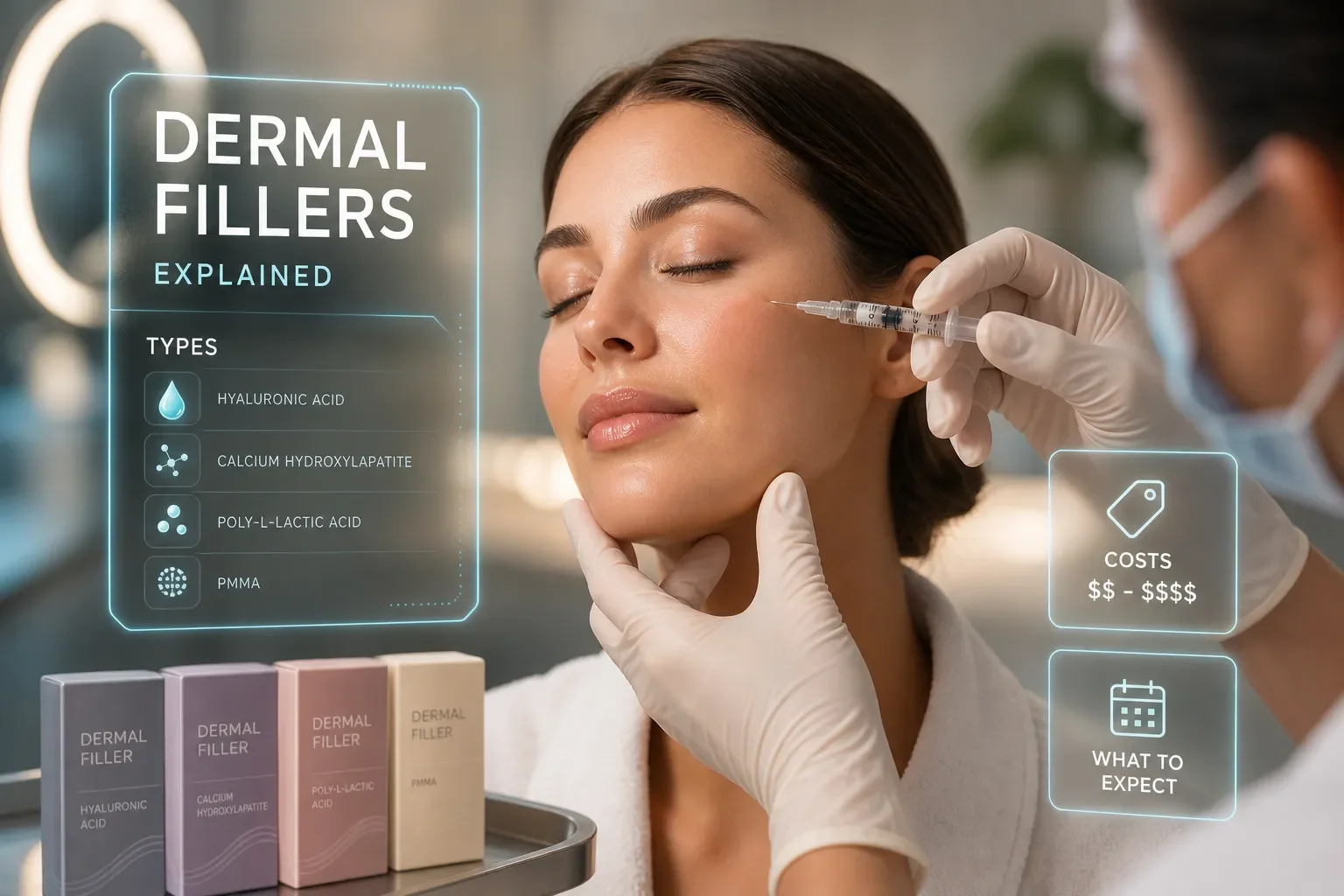
Dermal fillers are injectable gels used to restore lost volume, smooth lines, and reshape facial contours. Most products in clinical use today are based on hyaluronic acid, a substance your body already produces naturally, which means they integrate well with tissue and, critically, can be dissolved if something goes wrong. That reversibility matters enormously when you are making decisions about your face.
The range of areas treated has expanded considerably over the past decade. Lips remain the most requested treatment, but cheeks, jawline, tear troughs, temples, and nasolabial folds are all routinely addressed with injectable fillers by experienced practitioners. At a nurse-led clinic like MAK Clinic in Knutsford, every patient begins with a clinical assessment rather than a treatment menu. The filler type, product density, and placement are matched to the individual's facial anatomy, not applied as a standard volume across the board. That distinction is the difference between a natural result and one that looks overdone.
This article covers what dermal fillers are, how they work, the main product types, what treatment involves, what it costs across the UK in 2026, the risks you need to understand, and how to verify that a practitioner is genuinely qualified before you book.
What dermal fillers are and how they work
How injectable fillers restore volume beneath the skin
Most modern fillers use cross-linked hyaluronic acid. When injected, the gel attracts water molecules and integrates with the surrounding tissue to create lift and volume where the face has lost structure over time. The density and degree of cross-linking in the gel determines its purpose: a softer, more pliable product suits delicate areas like the lips, while a firmer, higher-density gel is placed deep on bone to create structural lift in the cheeks or jawline. Most formulations also contain lidocaine, which reduces discomfort during the procedure without requiring a separate local anaesthetic injection. For an industry overview of injectable treatments and indications, see authoritative guidance on injectable fillers.
The facial areas most commonly treated with dermal fillers
Lip fillers are among the most frequently requested treatments, used to add definition and volume. Cheek fillers restore mid-face lift and projection. The jawline is contoured to sharpen definition, and the tear troughs are filled to address under-eye hollowing. Nasolabial folds and temples are also treated, the latter providing structural support to the upper face as it loses volume with age. Placement depth varies considerably by area: tear trough treatment requires an ultrafine, low-viscosity product placed superficially, while cheek treatment involves a firm gel placed close to the bone. Anatomical knowledge is not optional for the person holding the needle, the margin for error in some of these areas is genuinely small.
The main filler types and how long each one lasts
Hyaluronic acid fillers: the most widely used option
Hyaluronic acid fillers, including Juvederm, Restylane, and Voluma, account for the vast majority of facial filler treatments. They are temporary, ranging from approximately 6 to 18 months depending on the area, and fully reversible using an enzyme called hyaluronidase. Learn more about dissolving dermal fillers and how reversal is managed in clinical practice. Lips break down filler faster, typically around 6 months, because of constant movement from talking, eating, and smiling. Cheeks and jawline hold results for 12 to 18 months due to the relatively static nature of those regions. Research including MRI-based findings suggests some HA filler can persist in deeper facial tissue beyond two years in certain patients; see further clinical research on long-term filler presence for context, and discuss cumulative volume with your practitioner.
Longer-lasting alternatives: calcium hydroxylapatite and poly-L-lactic acid
Radiesse (calcium hydroxylapatite) and Sculptra (poly-L-lactic acid) work differently from HA fillers and suit specific indications. Radiesse lasts 12 to 18 months and stimulates natural collagen production alongside its volumising effect, making it well suited to cheeks and deeper folds. Sculptra works through a different mechanism: the gel carrier dissipates quickly, but the poly-L-lactic acid particles trigger gradual collagen synthesis over weeks and months, with results building progressively and lasting up to two years or more.
These biostimulatory options are not appropriate for every area. Sculptra and Radiesse are generally avoided in the lips and tear troughs due to the risk of uneven texture in delicate or highly mobile tissue. As for permanent fillers, most experienced practitioners in the UK no longer recommend them. The inability to reverse them and the long-term complication profile do not justify their use over safer, temporary alternatives.
What to expect during treatment and in the days after
The treatment process from consultation to result
A proper dermal filler treatment follows a clear clinical sequence. The consultation comes first, and it is not a formality: this is where the practitioner assesses your anatomy, discusses your expectations, reviews your medical history, and identifies any contraindications. After that, the skin is cleansed, a topical numbing cream is applied, injection points are marked, and the filler is placed using either a fine needle or a blunt-tipped cannula depending on the area and technique. The practitioner then gently moulds the product to ensure even distribution. The procedure itself takes between 15 and 45 minutes depending on how many areas are treated.
Aftercare and the recovery timeline
The aftercare instructions are straightforward and worth following precisely:
- Avoid touching or applying pressure to the treated area for 24 hours.
- Skip strenuous exercise for 48 hours.
- Avoid alcohol and blood thinners in the days before and after treatment, as both increase the risk of bruising.
- Sleep with your head slightly elevated if swelling develops.
- Apply SPF daily to protect the treated skin.
Visible results are often apparent immediately, though initial swelling can temporarily alter how the outcome looks. Most redness and bruising resolves within 2 to 3 days, and most patients return to their usual activities the same day or the day after. The filler fully settles and integrates with surrounding tissue over approximately two weeks, which is when you see the accurate final result.
How much dermal fillers cost in the UK
Typical UK pricing by treatment area in 2026
UK filler pricing in 2026 varies by area, product brand, and the practitioner's qualifications and experience. The table below gives a general guide to what patients can expect to pay:
Treatment area

  Typical price range
  Syringes typically required


  Lip fillers
  £200, £400
  1 syringe (subtle to moderate volume)


  Cheek fillers
  £300, £500 per syringe
  2, 4 syringes across both sides


  Jawline contouring
  £350, £600
  2, 4 syringes


  Tear troughs
  £350, £600
  Less than 1 full syringe (delicate area)
Multi-syringe packages can lower the effective per-syringe cost. London and the South East tend to run 20 to 40 per cent higher than regional pricing, so patients in Cheshire and the North West can often access the same standard of care at a more accessible price point. For an updated market overview, see a recent survey of dermal filler cost in the UK (2026).
Why the cheapest option is rarely the right one
The cost of filler treatment reflects the product brand, the practitioner's clinical qualifications and indemnity insurance, the quality of aftercare, and whether a full consultation precedes the injection. Choosing an unqualified injector to save money is not a neutral decision, it is a risk transfer. Asymmetry, over-correction, and serious complications all cost significantly more to resolve than the original treatment. The consultation, the credentials, and the emergency protocols in place matter far more than the price per syringe.
The risks and side effects you need to understand
Common side effects and how quickly they resolve
Bruising is the most frequent side effect of filler treatment, occurring in roughly one in five patients. Swelling, redness, tenderness, and mild itching at injection sites are also normal responses to the needle and the gel integrating with tissue. These are not complications; they are expected and temporary. Most redness and swelling clears within 7 to 14 days, and most patients return to their usual activities the same day or the day after treatment.
Rare but serious complications
Vascular occlusion is the most critical risk associated with dermal filler treatment. It occurs when filler is accidentally injected into or compresses a blood vessel, blocking circulation to the surrounding tissue. The estimated incidence in clinical studies is approximately 0.3%, but the consequences of a missed or delayed diagnosis are severe: skin necrosis, vision loss, or stroke. Key warning signs include sudden pain, skin blanching, and delayed capillary refill. Immediate treatment with high-dose hyaluronidase is the established emergency protocol. This is precisely why a practitioner's anatomical knowledge and immediate access to hyaluronidase are non-negotiable clinical requirements, not optional extras. For clear safety advice and practical dos and don'ts, refer to the UK Government's guidance on dermal fillers.
Beyond vascular complications, delayed-onset nodules occur in approximately 0.5% of HA filler treatments and can appear weeks to months after injection. Granulomas, infection, and malar oedema (swelling that develops as filler degrades and absorbs water) are also documented, though uncommon. Longer-acting and permanent fillers carry higher complication rates than HA-based products across the board.
How to find a qualified and safe filler practitioner in the UK
The credentials and registers every patient should check
Each register is publicly searchable and takes under five minutes to check. For nurses: confirm registration on the Nursing and Midwifery Council (NMC) register and an independent prescribing qualification (V300 or equivalent), which allows them to prescribe prescription-only medicines such as botulinum toxin commonly used alongside fillers; many clinics publish information about their approach to anti-wrinkle injections and combined treatment planning. For doctors: verify GMC registration and a current licence to practise. For dentists: check GDC registration. For the clinic itself: confirm registration with the Care Quality Commission (CQC) in England.
The critical warning here is this: there is currently no law in the UK preventing an unqualified person from injecting dermal fillers. Anyone can purchase and administer them without any medical training whatsoever. You cannot assume a practitioner is medically qualified based on a price list, a clinic name, or a social media following. You have to check the registers directly.
What a medically qualified clinic looks like in practice
MAK Clinic in Knutsford is a practical example of what an appropriate standard of care looks like. Jennifer, the clinic's founder and lead practitioner, is a Nurse Prescriber registered with the NMC, holds an independent prescribing qualification, and brings 20 years of full-time medical aesthetics experience to every treatment. She trained under internationally recognised doctors and surgeons, and her clinical assessment process is built around the individual patient, not a fixed treatment menu.
A clinic operating at this standard carries hyaluronidase for emergency management of vascular complications, understands the facial anatomy required to avoid vascular structures during injection, and selects product type and volume based on each patient's individual presentation. For patients across Cheshire, whether travelling from Wilmslow, Altrincham, Alderley Edge, or Hale, this level of clinical rigour genuinely protects both your safety and your result. If you live locally, learn more about Dermal Fillers Cheshire services and what to expect at MAK Clinic.
Making an informed decision about dermal filler treatment
Dermal fillers are effective, minimally invasive, and well-tolerated when performed correctly by a qualified practitioner. The type of filler matters. The practitioner's qualifications matter more. And the consultation process, the one that happens before any product is opened, is where the real clinical work begins. Be honest about costs, take the risks seriously, and verify credentials before booking anything.
If you are considering filler treatment in Knutsford or the surrounding Cheshire area, a clinical assessment at MAK Clinic will give you an honest picture of what treatment can realistically achieve, which approach suits your anatomy and goals, and whether treatment is appropriate at all. That conversation is free and gives you a clear clinical picture before you commit to anything. Book your consultation at MAK Clinic and start with the assessment that every good treatment depends on.
TREATMENT FAQs
-
At Medical Aesthetics Knutsford (MAK Clinic), we are more than just a clinic; we are pioneers in the aesthetic treatment industry with a commitment to excellence that spans over two decades.
Based in Knutsford, MAK Clinic is easily accessible from Manchester and surrounding Cheshire areas, including Alderley Edge, Macclesfield, Wilmslow, Northwich and Hale.
MAK Clinic only uses the highest-quality Botulinum Toxin and filler products, including Juvederm, Belotero, Restylane, and Teosyal.
MAK Clinic exclusively uses the highest quality, regulated products, and our registered healthcare practitioners perform all procedures.
Founded by Jennifer Dowdall - RGN INP, all treatments are performed or overseen by Nurse Prescriber Practitioners, ensuring the highest standards of medical safety and expertise.
Read more about your aesthetics practitioner, Jennifer or more about MAK Clinic. Read our latest reviews or get in touch.
-
You can book a consultation for the Dermal fillers treatment using the Book Now page or the universal "Book Now" button at the bottom right of every web page.
During the booking process, you can find the pricing for the treatment and the value-added complementary therapies that enhance its effectiveness.
If you need clarification on something, please feel free to book a consultation with us first so that we can talk about your goals and a personalised treatment plan.
-
Dermal fillers are used to restore lost volume, smooth lines and enhance facial contours. Common treatment areas include the lips, cheeks, jawline, tear troughs, temples and nasolabial folds.
The best results come from a personalised assessment, where the filler type, volume and placement are chosen based on your facial anatomy rather than a standard treatment menu.
-
Results vary by area and product. Lip fillers typically last around 6 months; cheek and jawline fillers generally last 12 to 18 months. Biostimulatory options such as Sculptra can maintain results for up to two years or more. Individual metabolism, lifestyle, and the volume used all influence longevity.
-
Hyaluronic acid-based dermal fillers have a well-established safety profile when administered by a medically qualified practitioner with a thorough knowledge of facial anatomy. Common side effects such as bruising and swelling are temporary. Serious complications, including vascular occlusion, are rare but can occur, which is why practitioner credentials and access to reversal agents matter so much.
-
Yes, hyaluronic acid dermal fillers can be dissolved using an enzyme called hyaluronidase. This is one of the main reasons many medically qualified practitioners prefer HA fillers for facial treatments.
Dissolving may be needed if filler has migrated, looks uneven, has been overfilled, or if a complication needs urgent treatment. It should always be carried out by a trained medical professional.
-
Yes, hyaluronic acid fillers can be dissolved using an enzyme called hyaluronidase. This is one of the key advantages of HA-based products over longer-lasting or permanent alternatives, and it is why most qualified practitioners favour them for the majority of facial filler treatments.
-
Lip fillers use a soft, pliable hyaluronic acid gel to add volume and definition to a highly mobile area. Cheek fillers use a firmer, higher-density product placed deeper on the bone to restore mid-face structure and lift. The products, placement technique, and volumes used differ significantly, which is why a single-size-fits-all approach is rarely appropriate.