How often to get B12 injections for maximum benefit
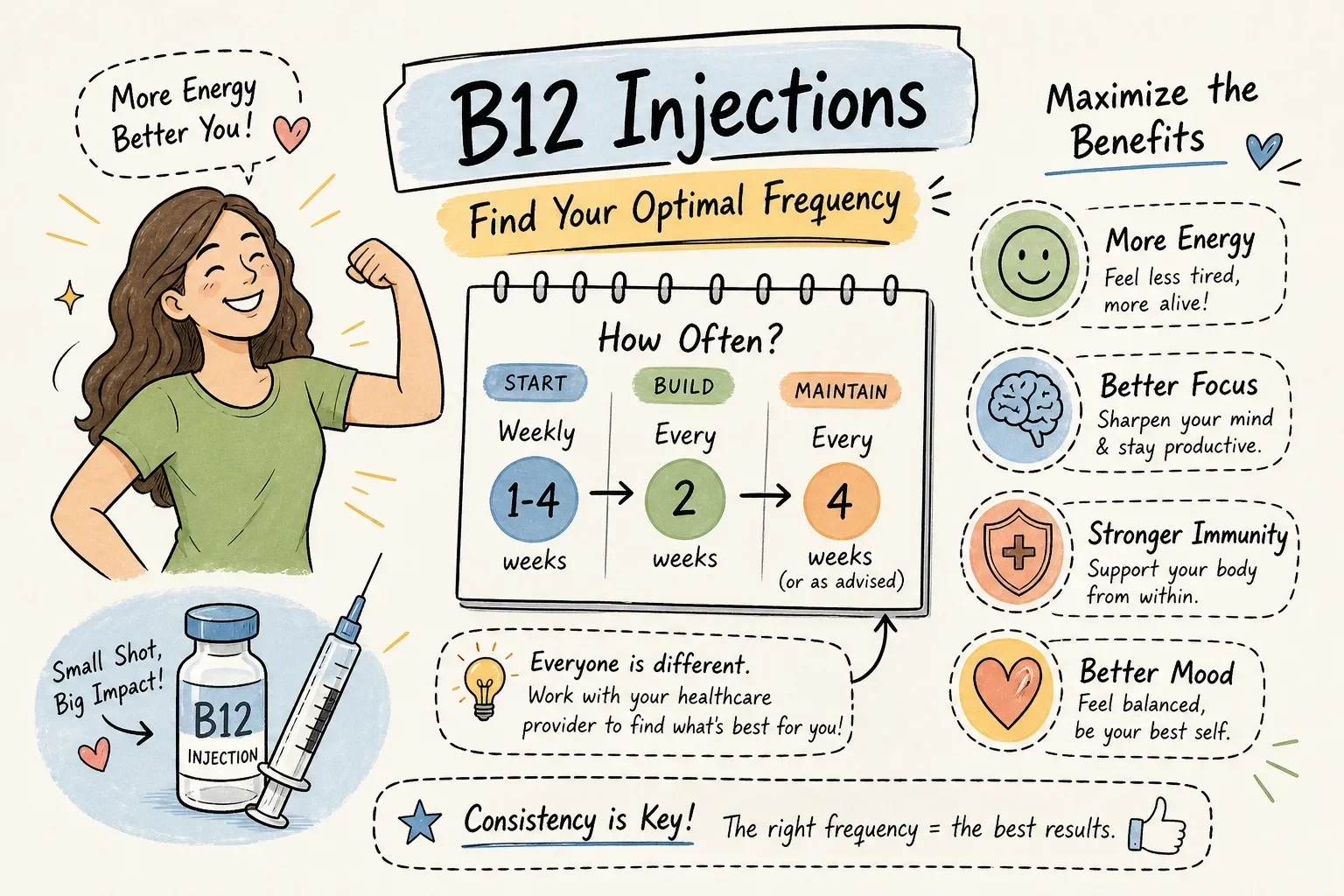
Ask your GP, check a wellness clinic website, then browse a health forum. You will get three completely different answers about how often to get B12 injections. One says every three months. Another says monthly.
The forum says weekly. The confusion is understandable, but it largely comes from treating injection frequency as a fixed rule rather than a clinical decision that depends entirely on why you are deficient in the first place. So how often should you get B12 shots for maximum benefit? The honest answer is: it depends, and this guide explains exactly what it depends on.
This guide uses NHS clinical guidance as its foundation and covers what responsible private clinic scheduling looks like alongside it. If you are considering injections through a Nurse Prescriber-led clinic like MAK Clinic in Knutsford, this guide will help you understand what a clinically sound schedule actually looks like, and what questions to ask before you commit to any programme.
Why the cause of your deficiency changes everything
The three main reasons people become B12 deficient
B12 deficiency has three primary causes, and each one leads to a different treatment pathway. The first is pernicious anaemia, an autoimmune condition where the stomach cannot produce intrinsic factor, the protein required to absorb B12 from food. The second is absorption problems caused by gut conditions such as Crohn's disease, previous stomach or bowel surgery, or long-term use of medications like metformin or proton pump inhibitors. The third is dietary deficiency, most common in vegans and strict vegetarians who simply are not consuming enough B12.
This distinction matters enormously. It determines not just the injection schedule but whether injections are necessary at all. Someone with pernicious anaemia will need lifelong injections because the underlying cause cannot be fixed. Someone whose diet was simply low in animal products may only need a short course, or no injections at all.
Why absorption problems require a fundamentally different approach
When the gut cannot absorb B12 properly, oral supplementation largely fails. Injections bypass the digestive system entirely, delivering the vitamin directly into the bloodstream. This is the core reason absorption-related deficiency typically demands ongoing, lifelong injections.
For dietary deficiency with normal gut function, the picture is different. High-dose oral B12 at around 1,000 mcg daily can do the same job as injections, because passive absorption through the gut lining still works, even without intrinsic factor, though at low efficiency. This is not a compromise; it is an evidence-supported alternative that suits many people in this group very well.
How often should you get B12 shots for maximum benefit, the loading phase
The NHS standard loading protocol explained
When B12 deficiency is confirmed and the cause is not dietary, treatment typically begins with a loading phase. The NHS standard is hydroxocobalamin 1 mg intramuscularly, three times a week for two weeks, or on alternate days until symptoms stop improving. The purpose is to replenish severely depleted stores quickly rather than waiting months for levels to rise gradually. Think of it as filling an empty tank before switching to a regular top-up schedule.
Hydroxocobalamin is the preferred formulation in the UK because it is retained in the body significantly longer than cyanocobalamin. Clinical pharmacology data indicate that roughly 75% of injected hydroxocobalamin is retained within 24 hours, compared with around 20% for cyanocobalamin. That difference translates directly into longer intervals between maintenance doses.
When neurological symptoms change the picture
If numbness, tingling, balance problems, or other neurological symptoms were present before treatment started, the protocol shifts. More frequent early injections are used, and specialist referral is typically recommended. Neurological B12 damage can become permanent if left untreated or under-treated, which is why the NHS takes a more aggressive early approach in these cases.
Many patients are not clearly told about this distinction. The loading phase is only ever the starting point; a maintenance schedule follows, and that schedule will depend heavily on what happened during loading and whether neurological symptoms were involved.
Maintenance schedules: how often should you get B12 shots for long-term benefit?
Pernicious anaemia and absorption-related deficiency
After loading, the standard NHS maintenance interval is hydroxocobalamin 1 mg intramuscularly every two to three months, for life. If neurological symptoms were part of the picture, every two months is typically recommended rather than three. The word "lifelong" is important here. Stopping injections when the underlying cause has not resolved will cause deficiency to return. There is no point at which treatment is complete and can be discontinued.
Some patients find that symptoms begin to return before their scheduled dose, particularly towards the end of a three-month interval. Returning fatigue, pins and needles, or brain fog before the next injection are signs worth raising with your prescriber rather than simply tolerating. If this happens consistently, it is a clinical signal that the schedule may need adjusting.
Dietary deficiency: a different maintenance path
For people whose deficiency is dietary and whose gut absorption is intact, the approach is more flexible. After loading, twice-yearly injections may be sufficient to keep levels stable. Better still, high-dose oral B12 at 1,000 mcg daily is often equally effective and considerably more convenient. This is not a lesser option; it is evidence-supported and appropriate for people in this group who do not have an absorption problem.
Correcting the diet itself is also worth considering. If deficiency was caused purely by low intake of animal products, improving dietary B12 through fortified foods or consistent supplementation may reduce reliance on clinic visits altogether over time.
Private clinic schedules versus NHS protocols
Private wellness clinics sometimes offer more flexible scheduling, monthly or quarterly injections for general energy support, independently of any deficiency diagnosis. These schedules are not necessarily grounded in a documented clinical need. Whether that flexibility is appropriate depends entirely on the individual patient's health picture, which brings us to the evidence for injections in people without confirmed deficiency.
How long does one B12 injection actually last?
Hydroxocobalamin versus cyanocobalamin: why the formulation matters
Serum B12 levels rise within hours of an injection, reaching measurable peaks within the first day. Hydroxocobalamin has a plasma half-life of approximately nine to ten days, compared with around six days for cyanocobalamin. In practice, a course of hydroxocobalamin can keep serum B12 elevated for months, which is why it supports longer maintenance intervals and is the formulation of choice for both NHS practice and reputable private clinics across the UK.
What to expect for symptom relief and when
Fatigue and brain fog in genuinely deficient patients often begin to improve within a few days of starting injections. Blood count recovery takes longer, typically six to eight weeks for anaemia to improve measurably. Neurological symptoms take the longest; recovery can span months, and improvement is not always complete, particularly if treatment was delayed. Setting realistic expectations at the start of treatment matters as much as getting the injection schedule right.
Frequent injections without a deficiency: what the evidence actually shows
The wellness clinic reality
Many people seek B12 injections not because they have a diagnosed deficiency but because they feel tired, foggy, or generally run-down. This is an understandable reason to look for help. The clinical evidence on this is consistent, though: in people with normal B12 levels, injections have not been shown to improve energy, cognition, or mood in controlled studies. Any perceived improvement is likely a placebo response, the general effect of receiving attentive clinical care, or a sign that the underlying cause of fatigue was never properly investigated.
Fatigue, brain fog, and low mood are nonspecific symptoms. They can come from thyroid problems, iron deficiency, poor sleep, stress, or dozens of other causes. Injecting B12 into someone with normal B12 levels does not address any of those causes, it just delays the investigation.
Safety and risk profile of regular injections
B12 injections are generally low-risk. Common side effects include injection-site discomfort, mild nausea, and occasional headache. Rare but serious reactions include anaphylaxis, so any clinic offering B12 injections should be equipped to manage allergic responses. There is no defined toxicity threshold for B12, and the vitamin is water-soluble, meaning excess is excreted. The absence of a toxicity ceiling does not make unlimited frequency medically appropriate. Without clinical assessment, frequent injections may simply be masking an undiagnosed cause of fatigue that warrants proper investigation rather than periodic shots.
Getting your frequency right: why a personalised assessment matters
What a proper clinical assessment looks like
A responsible B12 injection schedule starts with blood tests to confirm actual deficiency, not a symptom questionnaire or a general sense that you might be low. The key markers are serum B12, folate, and a full blood count. A Nurse Prescriber will also review your symptom timeline, medication history, dietary habits, and any conditions that might affect absorption. Without this foundation, any schedule is clinical guesswork, regardless of how confidently it is presented.
The assessment matters because it shapes everything that follows: whether you need injections at all, which formulation is appropriate, how intensive the loading phase should be, and what maintenance interval is genuinely evidence-based for your situation. How often you should get B12 shots for maximum benefit cannot be answered without this information.
How MAK Clinic approaches B12 injection therapy
At MAK Clinic in Knutsford, vitamin B12 injections are part of a clinically assessed wellness programme. Jennifer, the clinic's founder and Nurse Prescriber with 20 years of full-time medical aesthetics and wellness experience, reviews each patient's individual health picture before recommending any schedule. That means blood test review, symptom assessment, and medication history, resulting in a genuinely personalised injection schedule rather than a one-size approach. For patients across Cheshire, including those travelling from Wilmslow, Altrincham, Alderley Edge, and surrounding areas, this offers a clinically grounded option for anyone seeking a properly assessed B12 programme rather than an unmonitored supplement routine. Contact the team directly to discuss whether a clinical assessment for B12 therapy is appropriate for your situation.
The short answer, finally
There is no universal answer to how often you should get B12 shots for maximum benefit, and anyone who tells you otherwise without first reviewing your blood results and medical history is not giving you clinical advice. Loading protocols, maintenance intervals, and formulation choices all depend on why you are deficient, whether neurological symptoms are involved, and how well your gut absorbs the vitamin.
For most people with pernicious anaemia or absorption-related deficiency, every two to three months is the evidence-based maintenance standard. For dietary deficiency, high-dose oral supplementation is often the smarter long-term choice. For anyone seeking injections purely for energy or general wellness, the evidence does not support it unless deficiency is first confirmed. The safest, most useful starting point is always a clinical assessment from a qualified Nurse Prescriber who can match your B12 injection schedule to your actual needs, not a schedule pulled from a forum or a wellness brochure.
B12 Injections FAQs
-
At Medical Aesthetics Knutsford (MAK Clinic), we are more than just a clinic; we are pioneers in the aesthetic treatment industry with a commitment to excellence that spans over two decades.
Based in Knutsford, MAK Clinic is easily accessible from Manchester and surrounding Cheshire areas, including Alderley Edge, Macclesfield, Wilmslow, Northwich and Hale.
MAK Clinic only uses the highest-quality Botulinum Toxin and filler products, including Juvederm, Belotero, Restylane, and Teosyal.
MAK Clinic exclusively uses the highest quality, regulated products, and our registered healthcare practitioners perform all procedures.
Founded by Jennifer Dowdall - RGN INP, all treatments are performed or overseen by Nurse Prescriber Practitioners, ensuring the highest standards of medical safety and expertise.
Read more about your aesthetics practitioner, Jennifer or more about MAK Clinic. Read our latest reviews or get in touch.
-
You can book a consultation for the B12 Injections treatment using the Book Now page or the universal "Book Now" button at the bottom right of every web page.
During the booking process, you can find the pricing for the treatment and the value-added complementary therapies that enhance its effectiveness.
If you need clarification on something, please feel free to book a consultation with us first so that we can talk about your goals and a personalised treatment plan.
-
For pernicious anaemia and other absorption problems, the NHS maintenance standard is one hydroxocobalamin 1 mg injection every two to three months, for life. If neurological symptoms were present at diagnosis, every two months is the usual interval. Stopping treatment lets the deficiency return because the underlying cause never goes away.
-
Hydroxocobalamin has a plasma half-life of around nine to ten days, and roughly 75% of the dose stays in the body after 24 hours. In practice, a full course keeps serum B12 raised for months, which is why maintenance doses sit two to three months apart. Cyanocobalamin clears faster and needs more frequent dosing.
-
Controlled studies show no improvement in energy, concentration or mood from B12 injections in people with normal B12 levels. Tiredness and brain fog have many causes, including thyroid problems, low iron and poor sleep. A blood test first tells you whether B12 is the problem at all.
-
Serum B12, folate and a full blood count. A Nurse Prescriber will also review your symptoms, diet, medication history and any gut conditions affecting absorption. Without these results, any injection schedule is guesswork.
-
B12 is water-soluble with no defined toxicity limit, and side effects are usually mild: injection-site soreness, slight nausea or a headache. Safety is not the main concern. Monthly injections without a confirmed deficiency risk hiding another cause of fatigue which needs proper investigation.